Festivals of Bhutan - Tshechu
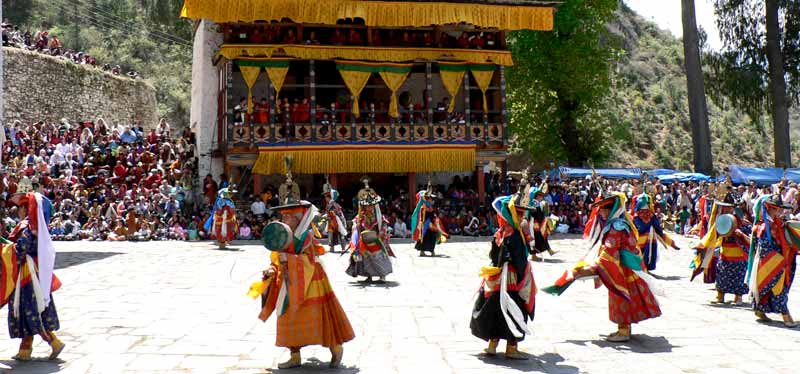
The Tshechu is a religious festival that is celebrated in all the Dzongkhags. The term “tshechu” in Bhutan is generally referred to as a series of religious festival that falls on the tenth day of the Tibetan lunar calendar. They are held in honor of the great Guru Rinpoche, who introduced Buddhism to Bhutan in the 8th century. Tshechus (festivals) are one of the best ways to experience the ancient living culture of Bhutan.
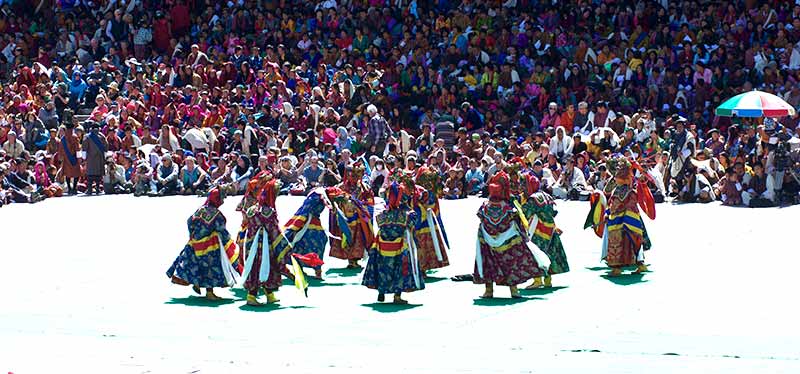
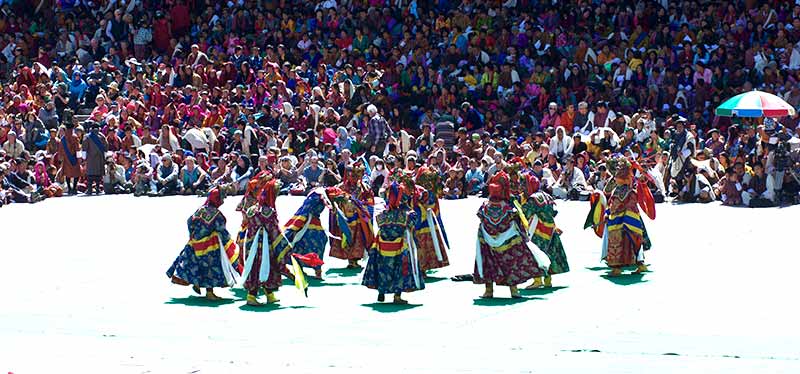
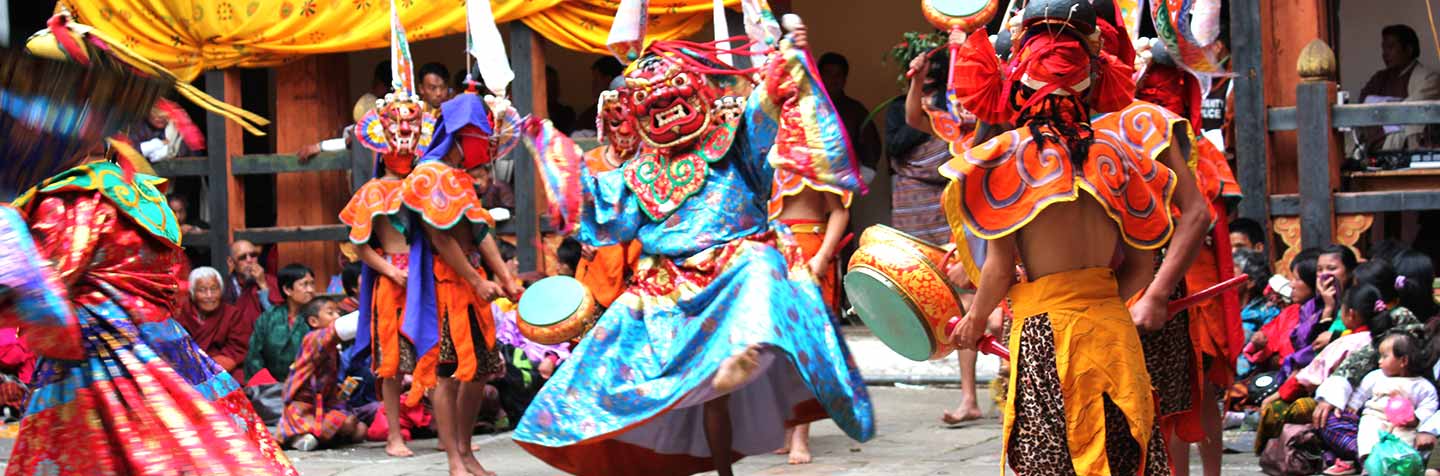
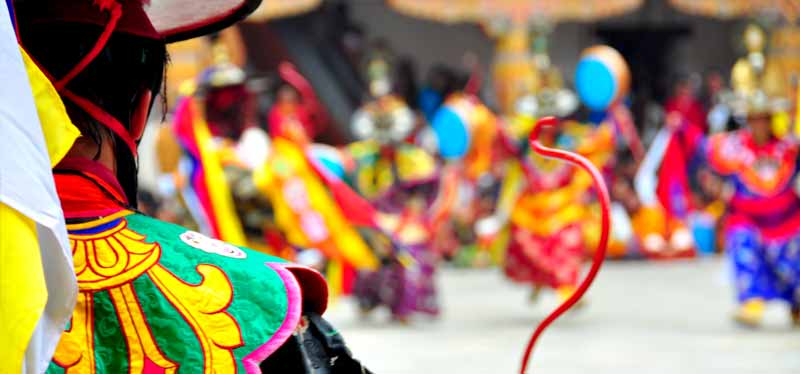
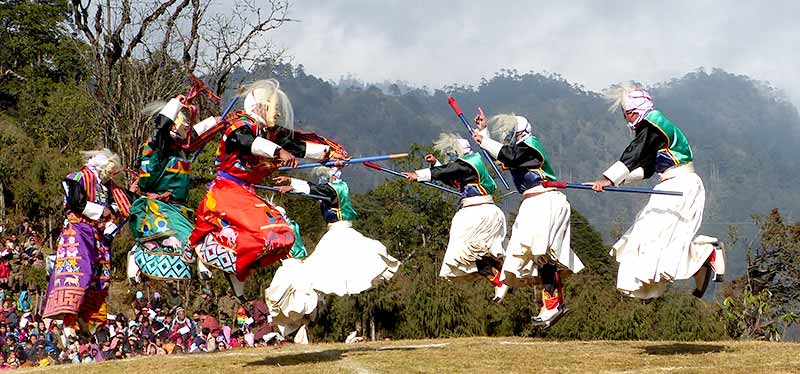
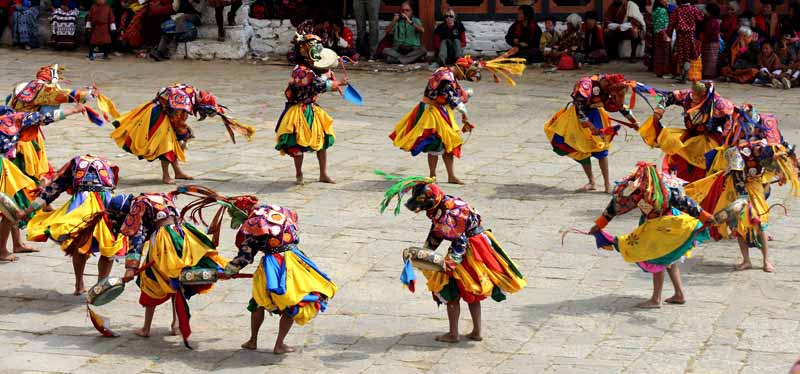
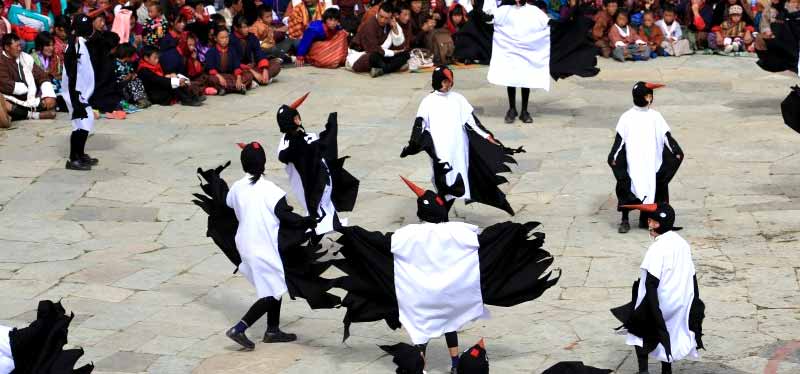
One of the biggest festivals in the country is the Thimphu Tshechu. This festival is held in the capital city for three days beginning on 10th day of the 8th month of lunar calendar. This Tshechu is witnessed by thousands of people many of which travel from neighboring Dzongkhags (districts) to attend the festivities. The actual Tshechu is preceded by days and nights of prayer and rituals to invoke the gods. When it was initiated by the 4th Desi, Gyalse Tenzin Rabgay in 1867 the Tshechu consisted of only a few dances being performed strictly by monks. These were the Zhana chham and the Zhana Nga chham (Dances of the 21 Black Hats), Durdag (Dance of the Lords of the Cremation Ground), and the Tungam chham (Dance of the Terrifying Deities). The Thimphu Tshechu underwent a change in the 1950s, when the third King Jigme Dorji Wangchuck, introduced numerous Boed chhams (mask dances performed by lay monks). These additions added colour and variation to the festival without compromising its spiritual significance. Mask dances like the Guru Tshengye (Eight Manifestations of Guru), Shaw Shachi (Dance of the Stags) are enjoyed because they are similar to stage-theater. Equally important are the Atsaras, who are more than just mere clowns. The Atsaras are the dupthobs (acharyas), who provide protection. The dances and the jesting of the Atsaras are believed to entrance evil forces and prevent them from causing harm during Tshechus. Modern Atsaras also perform short skits to disseminate health and social awareness messages. To farmers, the Tshechu is also seen as a break from farm life. It’s an occasion to celebrate, receive blessings and pray for health and happiness.
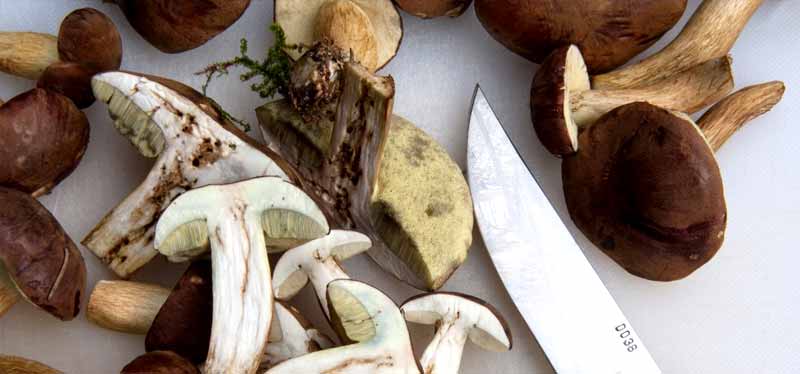
Learn to identify and harvest the fabled wild Matsutake mushrooms of Bhutan. Prized by gourmets in Japan, this fungi is native to the forests of Ura valley in central Bhutan. Hike the valley’s fragrant trails and give in to the thrill of discovering your own private patch of this most coveted of mushrooms. You can always visit the region’s exquisite temples and monasteries which rank amongst the most prized historical treasures of Bhutan.
This festival is scheduled during the 4th weekend of August and takes place in beautiful Ura valley. Ura is renowned for being one of the most picturesque valleys in the entire kingdom. Its inhabitants, the Uraps are a cheerful, hospitable people. Ura provides one of the most authentic experiences of traditional rural Bhutanese life available. At the festival, visitors will be learn to identify these fabled mushrooms as they embark on mushroom picking excursions around the pristine forests and hills. They’ll be able to sample delicious Matsutake recipes, engage in songs and dances together with the locals, hike through the stunning Himalayan landscape and even relax in traditional open-air mineral baths.