Your journey to Bhutan
The kingdom of Bhutan lies deep in the eastern Himalayas. It is surrounded by the Tibet Autonomous Region (TAR) of China to the north, and the Indian territories of Assam and West Bengal to the south, Arunachal Pradesh to the east and Sikkim to the west.
Bhutanese society is free of class or a caste system. Slavery was abolished by the Third King Jigme Dorji Wangchuck in the early 1950s through a royal edict. Though, a few organizations to empower women were established in the past, Bhutanese society has always maintained relative gender equality. In general our nation is an open and a good-spirited society.
Bhutan is a Buddhist country and people often refer to it as the last stronghold of Vajrayana Buddhism. Buddhism was first introduced by the Indian Tantric master Guru Padmasambhava in the 8th century. Until then the people practiced Bonism, a religion that worshiped all forms of nature, remnants of which are still evident in some remote villages in the country.
Thimphu
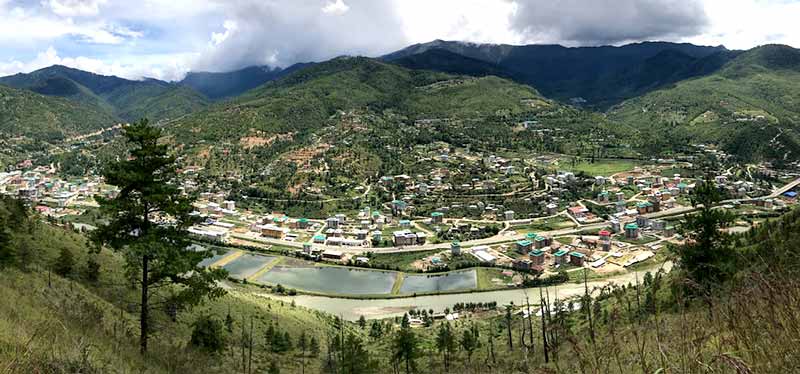
Thimphu is the fourth highest capital in the world by altitude and ranges in altitude from 2,248 metres (7,375 feet) to 2,648 metres (8,688 feet).
In 1641 Shabdrung Ngawang Namgyal took over that Dzong from the Lhapa Kagyu, reconsecrated, and renamed it Tashichö-dzong. It was then established as the main seat of the Southern Drukpa Kagyu and the summer residence of the monastic body or sangha headed by Shabdrung Rinpoche.
Most of this original dzong was destroyed by fire in 1772 and a new dzong was built at the present site by the sixteenth Desi, Sonam Lhudrup, and it was then consecrated by the thirteenth Je Khenpo, Je Yonten Taye, who named the new Dzong Sonamchö-dzong. Following the death of the Desi it was renamed Tashichö-dzong after the old Dzong.
Top Attractions : Tashichho Dzong, Simtokha Dzong, National Memorial Chorten, Buddha Dordenma Statue, Folk Heritage Museum, Centenary Farmers Market, The Jungshi Paper Factory, Druk Wangyal Chortens, Motithang Takin Preserve, Dochula.
Paro
Paro is at about 2200 meters altitude.
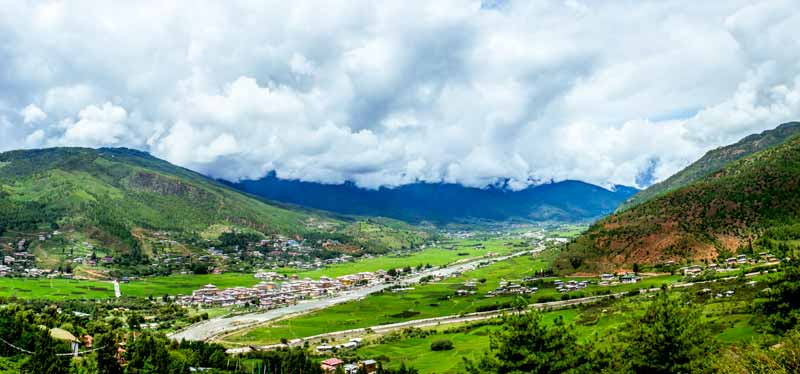
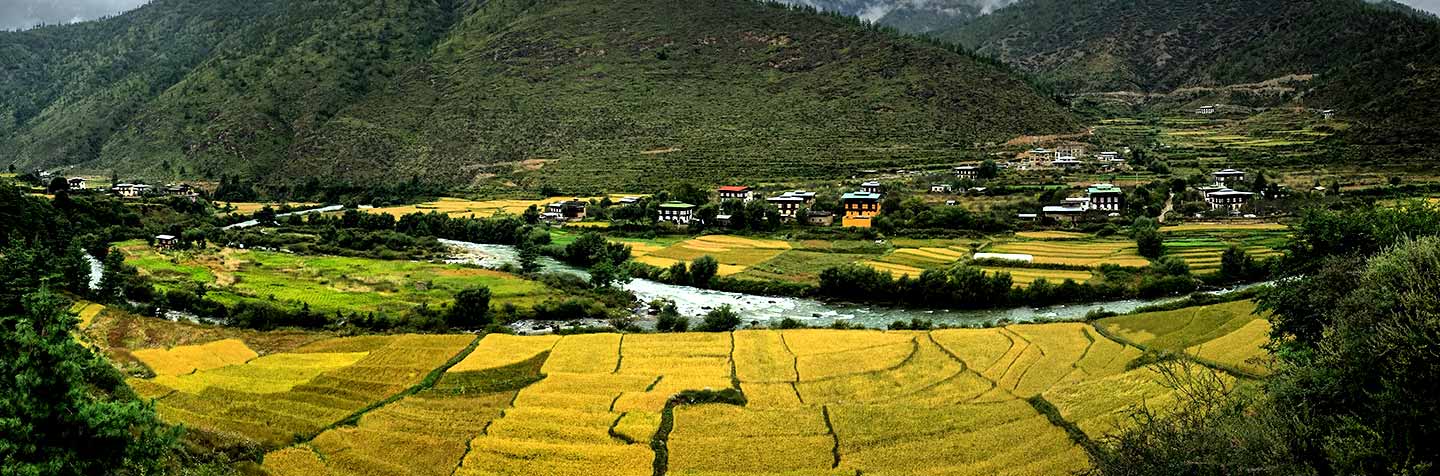
Paro valley extends from the confluence of the Paro Chhu and the Wang Chhu rivers at Chuzom up to Mt. Jomolhari at the Tibetan border to the North. This picturesque region is one of the widest valleys in the kingdom and is covered in fertile rice fields and has a beautiful, crystalline river meandering down the valley.
Accentuating the natural beauty are the elegant, traditional-style houses that dot the valley and surrounding hills. One of the distinctive features of Paro town is that it is situated in a flat valley bottom and follows a grid-like pattern. The central plaza is adorned with a large prayer wheel and a small amphitheater where events are held throughout the year.
There are over 155 temples and monasteries in the area, some dating as far back as the 14th century. The country’s first and only international airport is also located in the region. Its close proximity to the historical and religious sites in the region has resulted in the development of an array of luxurious, high-end tourist resorts making Paro one of the main destination for visitors.
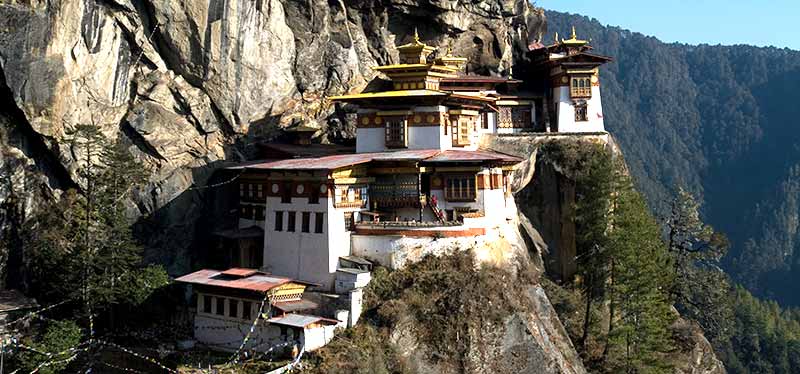
Top Attractions : The Tiger’s Nest Temple, Paro International Airport, The National Museum of Bhutan, Drugyel Dzong, Jangtsa Dumtseg Lhakhang, Dobji Dzong, Tamchog Lhakhang.
Punakha
According to a local legend, the sage Padmasambhava prophesized that “a person named Namgyal will arrive at a hill that looks like an elephant”. Ngawang Namgyal, 1st Zhabdrung Rinpoche, found the peak of the hill, which appeared in the shape of trunk of an elephant as prophesized, and built the dzong in 1637-38.
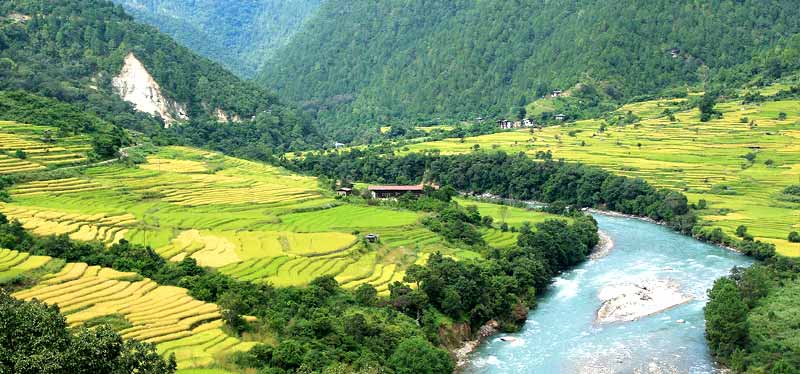
Built strategically at the junction of Pho Chhu and Mo Chhu rivers in 1637 by Shabdrung Ngawang Namgyal to serve as the religious and administrative center of the region, Punakha Dzong has played an important role in Bhutan’s history. Damaged by four catastrophic fires and an earthquake, the Dzong has been fully restored at present.
In addition to its structural beauty, Punakha Dzong is notable for containing the preserved remains of Zhabdrung Ngawang Namgyal, the unifer of Bhutan as well as a sacred relic known as the Ranjung Karsapani. This relic is a self-created image of Avalokiteswara that miraculously emerged from the vertebrae of Tsangpa Gyarey the founder of the Drukpa School when he was cremated.
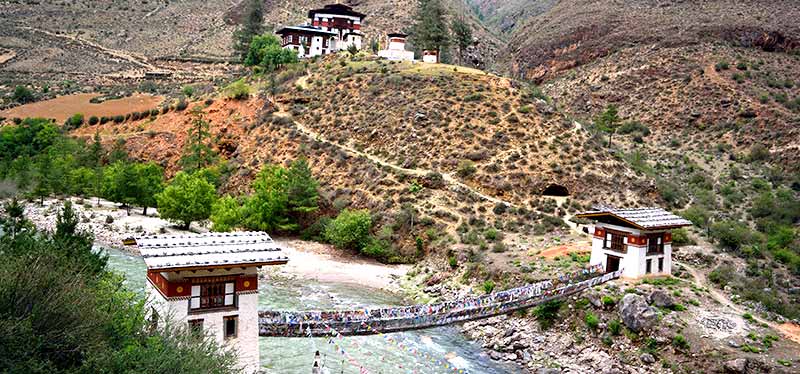
Top Attractions : Punakha Dzong, Chimi Temple, Khamsum Yulley Namgyal Chorten, Punakha Suspension Bridge, Sangchhen Dorji Lhuendrup nunnery.
Phobjikha
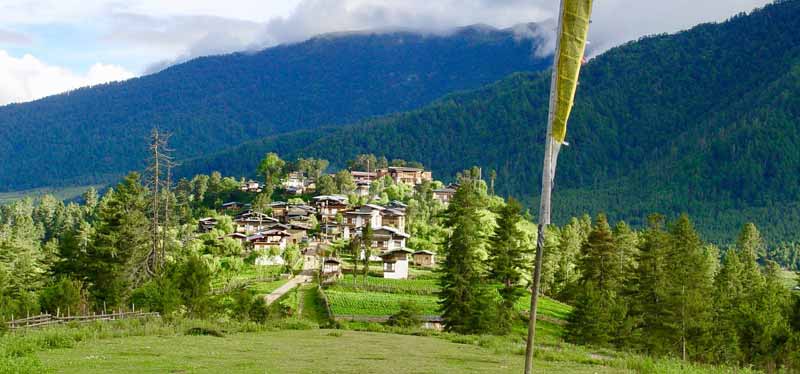
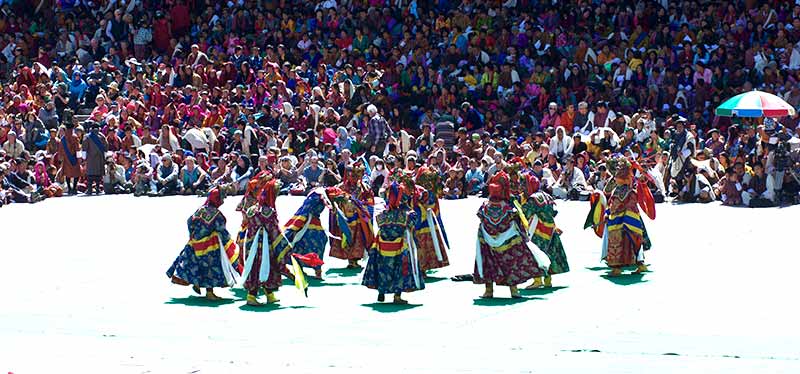
One of the most notable sites in the district is Phobjikha Valley. This valley is the habitat of rare and endangered Black-necked Cranes that roost there during their annual migrations. The residents of the valley have garnered much acclaim for their conservation efforts to preserve the habitat of these beautiful birds. Every year the Black-necked Crane Festival is held in Phobjikha in order to protect and spread awareness of the cranes. The Festival includes songs, masked dances and plays by the local school children. This event is one of the most unique and popular festivals in the country.
Top Attractions : Gangtey Monastery, Black-necked crane Information Center, Gangtey Nature Trail, Black-necked crane Festival.
Bhumthang
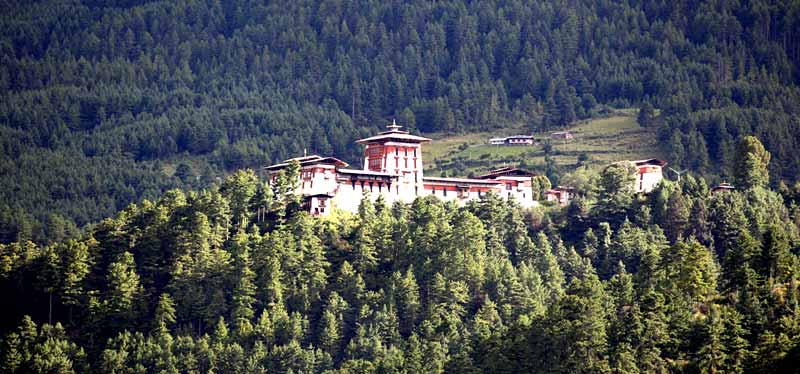
This region that spans from 2,600-4,500 m is the religious heartland of the nation and home to some of its oldest Buddhist temples and monasteries. Tales of Guru Padmasambhava and the tertons (“religious treasure-discoverers”) still linger in this sacred region.
Bhumthang Dzongkhag consists of four main valleys, Ura, Chumey, Tang and Choekhor. Choekhor is the largest of the four and is widely considered as ‘Bhumthang Valley’. The valleys are broad and gentle carved by the ancient glaciers. The wide and scenic valleys draws a large number of tourists each year.
Top Attractions : Burning Lake, Kurje Temple, Jambay Temple, Bhumthang Brewery, Ugyenchholing Palace.
Haa
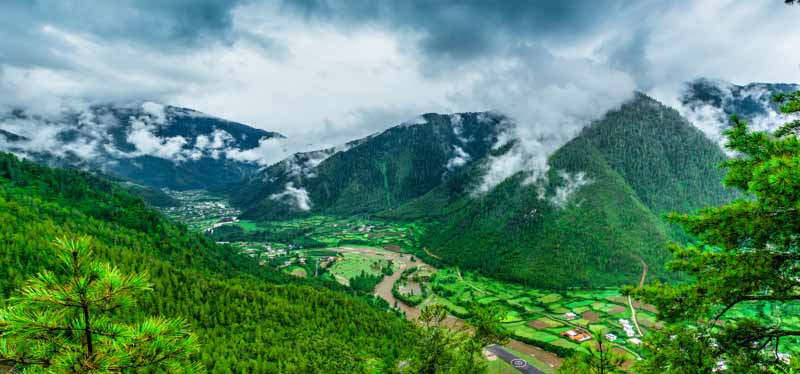
Located in South West of Paro and covering an area of roughly 1706 sq. km, Haa is one of the smallest Dzongkhag in the country. This tiny region is one of the most beautiful and isolated areas in the kingdom, adorned with pristine alpine forests and tranquil mountain peaks.
Haa is the ancestral home of the Queen Grandmother and the illustrious Dorji family. This valley remains one of the least visited areas in the country and retains the air of an unspoiled, primeval forest. The wooded hills of Haa provides an ideal location for hiking and mountain biking. Biking around the valley to visit the dozen or so local temples is an enjoyable way to spend the day when visiting.
Top Attractions : arpo and Kakpo Monastery, Haa Summer Festival, Juneydrak Hermitage.